Fabric Notes / Guide
Cotton or linen for everyday napkins?
Compare the actual cloth at the table, then see which one you want to keep washing.
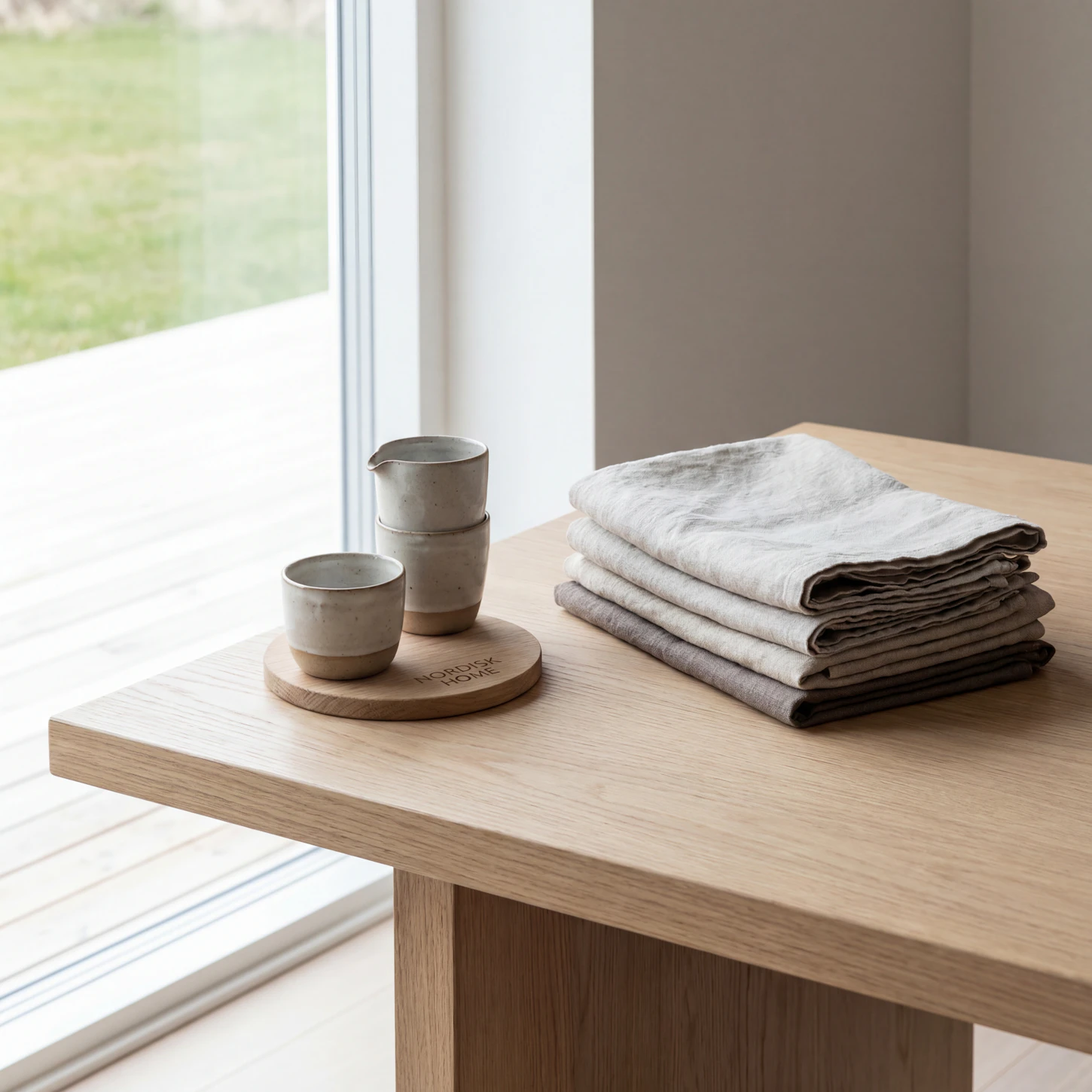
Put the fibre name in its place
Cotton and linen are useful clues about the fibre, but neither tells you whether a finished napkin will be soft, thin, stiff or easy to fold. The weave, weight and finish also matter. A light and smooth cotton poplin may fold very differently from a thicker cotton canvas. A loosely woven linen may feel more relaxed than a densely woven sample from the same store. Compare the exact fabrics you can buy rather than making your decision from the word cotton or linen on an oversized label.
Think of the table you set most often. An everyday napkin might need to sit beside a cereal bowl at breakfast and then go in the wash with the next load. A cloth for long dinners might have a larger job as a lap napkin, and you may tolerate more time folding it. These are different criteria. If the same fabric works for both, fine; don't require that of your first set.
Compare the folds beside a real plate
Choose two swatches large enough to fold or borrow two napkins of a similar size. Put them next to the same plate in the same light. Fold each in half and in quarters. A firm sample may look neat but stand up stiffly over a thick corner. A softer sample may settle easily and be comfortable to open on your lap, but it can show a crooked hem more readily. Decide which behaviour helps rather than awarding a point automatically to the one that looks sharpest.
Look at the edge when you pinch it through both folds. If you are making the set, build a tiny version of the hem as well. Some fabrics are noticeably thicker once the corner layers come together. That does not rule them out, but it may change how wide you want the fold or how much time you are willing to spend sewing corners. If you plan to buy the set, look at the actual sample hem, not only the fibre composition.
Run a modest table-use test
Put a few drops of plain water on each sample placed on a washable surface. Compare whether they bead briefly or spread, how the wet patch feels after blotting, and whether a second fold keeps it from immediately soaking through. This is a simple comparison of the pieces in front of you, not a laboratory absorption rating. A finish can change after washing, so compare freshly laundered samples if that is how you expect to use them.
Try the fabrics without trying to prove one better in every respect. A tightly folded napkin can be useful for picking up a small spill, while a soft cloth may feel more comfortable during dinner. Thick cloth can take up more room in the drawer and be awkward for small hands to fold. Decide which of those differences you will notice each day. If both candidates handle a drop of water similarly, weight and softness might be the more useful deciding factors.
Try the care routine you actually have
Follow the supplier's instructions for the exact cloth. Wash and dry the swatches within those limits before deciding what you would do with a whole set. If you want a quick weekday routine, take the samples out as you normally would, fold them without ironing and set them beside the plate. If both look acceptable, you don't need to choose based on which would look better on an ironing board. If a wrinkle direction bothers you, find out whether refolding while the cloth settles is practical before rejecting every fabric of that fibre.
For a washable project, record dry measurements across and along the fabric before the test, then measure again when it has dried and lies flat. A sample that changes more in one direction than the other can leave you with a rectangle instead of a square if you cut first. Keep any strong, untested dyes separate during a trial wash. Use your own care results to decide whether prewashing the yardage makes sense, rather than applying a fixed shrinkage percentage to all linen or cotton.
Use the easiest tie-breaker
Compare a plausible pair: a smooth cotton that folds neatly and a softer linen that looks more rumpled straight from the wash. Suppose both feel good against the hand, but the linen hem stacks more comfortably in the drawer and you like the creases. In that case the linen makes sense for your table. In another household, the smoother cotton might be easier for everyone to fold, and that regular use is a stronger reason to choose it than its fibre reputation.
If the candidates are close, make or buy one before deciding on six. An inexpensive sample is useful only if you use it normally: leave it within reach at breakfast, use it again at dinner and fold it back into the drawer after washing. Check whether anyone reaches for it repeatedly or whether it stays beneath the old stack. A cloth people skip is telling you something the comparison on a shop counter could not.
Record the fabric that earned a place
Note the exact cloth, visible weave, usable width and accepted care routine if you will sew more. If buying, record finished size and the way the hem sits. Add the reason you chose it in plain language. A note such as folds flat and dries in our regular wash is enough to guide the next purchase. It is more useful than a blanket rule that every napkin should be linen or every family should choose cotton.
Keep an unwashed scrap or one alternative for reference if you expect to buy the material again. Textile colour and feel can vary between batches, and a swatch helps you compare before cutting. Start the next project with the fabric that fits that job. The cloth you choose for an everyday lap napkin need not be the same one you reserve for a runner that gets put out once a week.
If you buy yardage, work out the cost per finished piece from the number you can actually cut across the usable width. A narrower cloth may cost less per yard but yield fewer napkins per row. Count the usable pieces before comparing prices.