Make / Guide
Make a set of everyday cloth napkins
Turn a length of washable cotton or linen into a stack that belongs on the table every day.
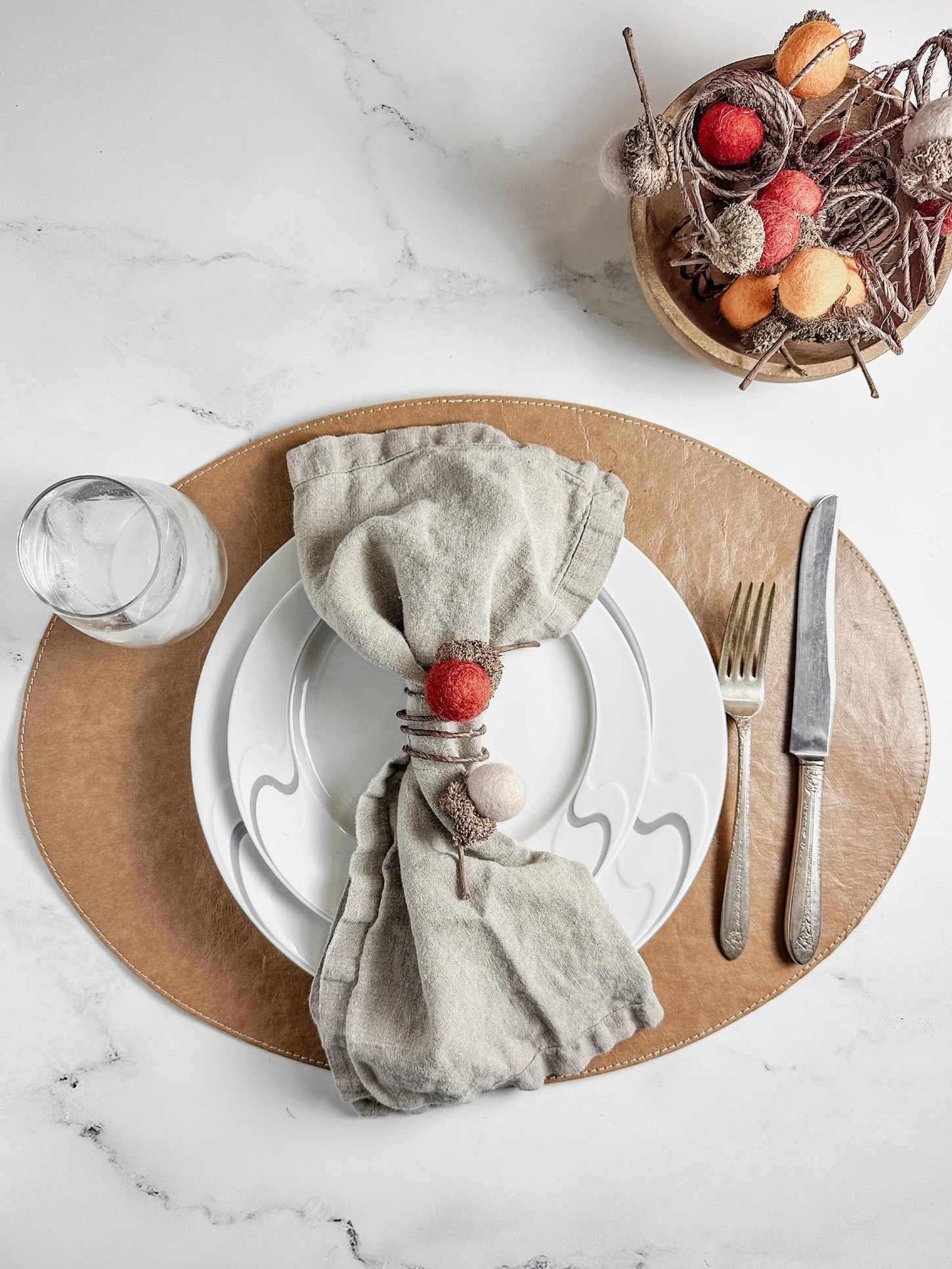
Pick the napkin you actually want to reach for
Set out one place at your table and bring over two napkins you already own. Try folding each beside a plate, opening it on your lap, and tucking it into the place where you keep clean napkins. The version that fits all three jobs is a better template than a size chosen from a photograph. A 16-inch square is a useful everyday starting point. A smaller one can work at breakfast or on a short table; a larger one may be worth the extra cloth when you use it as a full lap napkin.
Choose the texture before committing to a color. For a first set, an easy-to-handle woven cotton or linen lets you see the folded edge clearly and gives you a good chance of catching it on the first pass. A sample that feels scratchy or stiff against your hands does not become an everyday favorite because you hemmed it beautifully. Test a small washed piece if the fabric feels dramatically different from anything you already use. A busy print can be forgiving about small stitch variations, but a stripe with a skewed print will make cutting and folding less forgiving.
Do the yardage calculation before cutting
For a 16-inch finished square with a double half-inch hem, cut an 18-inch square. Each finished edge consumes one inch: the first fold hides half an inch, the second hides another half inch, and there is one edge at each end of a dimension. Put the addition into your notes immediately. It is easy to remember the finished number when you are standing at the cutting table and cut every piece two inches short.
Measure the usable width after washing, excluding the stiff selvages. If it measures 39 inches, two 18-inch squares fit across, leaving three inches in total for waste and alignment. Three rows give you six napkins, and the rows alone need 54 inches of usable length. You still need extra for straightening the ends and for any pattern alignment you want. If the usable width turns out to be 35 inches, two squares no longer fit: change the finished size, accept a different layout, or choose a wider cloth before promising yourself a set. For a directional motif, lay all the shapes on paper and face them the same way before assuming you can rotate a piece to make it fit.
Cut one on the grain
Find the selvage, then mark an edge parallel to it and use a square to mark across. A cut from a shop is not always square to the woven grain, and a printed stripe is not necessarily a reliable substitute. Start from a straight woven edge when you can and decide separately whether the print looks sufficiently straight in the finished square. If the two disagree noticeably, choose a different area of the fabric or use that piece for something where the pattern does not meet a straight border.
Spread the material across a table instead of allowing most of it to hang off the edge. Fabric that pulls on itself can distort the measured line. Cut a single layer for the first sample and compare the diagonals on a flat surface. Minor inconsistencies can disappear into a hem, but make this choice consciously. If two opposing corners won't sit flat when the piece is folded, check the squaring before trimming; cutting away at individual corners often makes the next fold harder to line up.
Press the corners and test the thickest stack
Fold the raw edges half an inch to the reverse and press using the temperature suitable for the cloth. Repeat the fold to conceal the raw edges. A card marked with the fold distance can help keep the second edge as even as the first one. Work away from you so you can lift a corner and see whether the raw edge is enclosed. A simple overlapping corner is a reasonable choice for a forgiving cloth; there is no need to learn a decorative corner technique at the same time as you make your first sample.
Try sewing across a folded scrap that reproduces the layers at a real corner. If the machine does not feed the corner evenly, try a compatible needle and stitch setting from the machine manual, or consider a lighter fabric rather than pulling the napkin through to force the machine. For the final piece, stitch close to the inside edge of the hem. With the needle down at the corner, lift the foot, pivot and check which fold you are about to catch before continuing. Look at both sides after the first edge, not after the whole set is done.
Wash the sample and fix the right problem
Wash and dry the sample the way you intend to use the set, within the fabric's care instructions. Smooth it without stretching and put it beside a plate again. If the square lies flat but the corners are heavier than you like, try a lighter cloth or test a different corner fold. If one edge rolls or a raw edge appears, check whether the stitch missed the inner fold before you change the whole pattern. If the square skews across the middle, check the cut direction and the way the cloth was supported while you stitched; a wider hem won't correct both problems.
Fold the washed sample twice and check whether you would comfortably put it away without ironing. A napkin can have a relaxed texture and still lie nicely on the table. What matters is whether it works in your house on a busy day, not whether it looks like a pressed shop sample.
Turn the sample into a repeatable set
Record the cut size, both fold widths, thread and needle, and anything you changed at the corners. Use the marks from the corrected piece, not written dimensions from an earlier attempt. Cut the remaining squares together only if the layers stay aligned and you have enough room to handle the fabric. Otherwise make them individually and use the same ruler marks every time. Press the edges in batches, then sew the corners one piece at a time so you can catch a fold that moved.
Finish by stacking the napkins in the order you want to use them and setting one place with each pattern variant. If you kept a spare strip, label it with the fabric and care method; it can become one replacement napkin later or a useful swatch for a matching runner. When the routine is easy enough to repeat, you have made a household tool rather than a set reserved for a special day.